Understanding the “Schedule” System: Sch 40 vs Sch 80 Explained
One of the most significant concepts that you must know is the schedule pipe system in pipe choice used in construction projects. Diameter and material of pipes are the only concerns of many professionals. But the schedule rating has a direct influence on strength, pressure, capacity and long-time performance. Failure to comprehend this concept may be very expensive. This guide clearly explains the schedule system and its operation. This also highlights the importance of picking the best schedule in various applications.
The True Meaning of the Schedule System
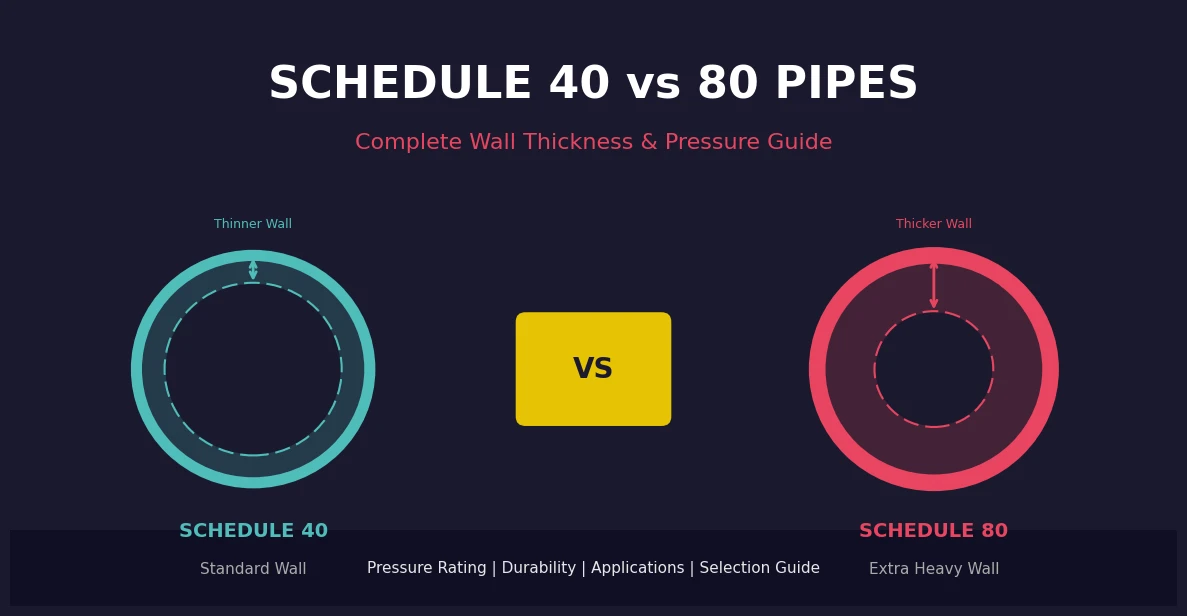
The thickness of the walls of a pipe is known as the schedule system of the pipe, instead of the outer diameter of the pipe. Pipes of the same nominal size will be of the same outer diameter. The thickness of the wall of the pipes has changed. The greater the number of the schedule, the thicker the wall becomes. This directly affects the capacity of the pipe to work with pressure, stress and outside forces. The knowledge of this system can be used to ensure safety, durability and efficiency in any piping project.
Why Creation of the Schedule System Matters?
The scheduling system was used to regulate the pipe specs among industries. Before this system, the pipe sizes were varied and caused confusion. Engineers need a stable method of stating strength requirements without redesigning whole systems. This was the solution of the schedule method that associated the wall thickness with pressure ratings. This helped to come up with systems that would conform to the safety standards and yet be economical.
The Influence of Schedule Ratings on Pipe Strength
Wall thickness is a determining factor of pipe strength. The thicker walls are the ones that resist internal pressure and that have fewer chances of deformation or breaking. Lighter walls are thinner and simpler to install, but cannot withstand a lot of stress. The rating of the schedule enables engineers to compromise the weight, cost and performance. The appropriate selection of the rating ensures it works under the desired conditions without costing more than it is supposed to operate.
Applications of Schedule 40
Sch 40 pipes are also commonly used in homes, offices, and light industries. They can be used in water supply lines, drainage systems, irrigation systems, and low-pressure systems. These pipes are used as they are cheap and convenient. They are lighter and hence easier to transport and install. For those projects where the pressure is not expected, this option is suitable and less costly.
Typical Usages of Schedule 80
Sch 80 pipes are intended to work in demanding situations. They find application in the industrial plants, processing plants, and high-pressure systems. They are less flexible in their thicker walls, which are also stronger and more durable. External influences or rough environments also make these pipes be selected. They are more costly and heavier, but better-resistant and increase in service life in harsh operations.
Wall Thickness and Pressure Ratings
The primary distinction between these schedules is in the thickness of the walls. Walls made thicker will enable pipes to sustain an increased internal pressure. This is why they are applicable in systems that have compressed fluids or gases. Gravity-fed or low-pressure systems only require thinner walls. It is important to learn pressure requirements and then devise a schedule. Wrong decisions may result in leaks, bursts or early failure.
Installation Proposals on Various Schedules
The process of installation differs with the thickness of the pipes. A greater thickness of pipes demands increased supports and greater fittings. Special tools may also be needed for cutting and joining. Smaller pipes are less difficult to handle and decrease the working time. You must factor in complex installation and performance requirements. This is important to make sure a plan runs smoothly and does not incur unnecessary delays or expenses in building.
Cost Differences and Budget Planning
Budget has a significant influence on the choice of materials. Pipes of heavier weight tend to be more expensive because they require more material. There is also a likelihood of an increase in transportation costs due to increased weight. Using a cheaper one without considering performance can raise repair costs in the future. The selection should be well planned to balance investment in the short run. This also ensures reliability in the long-run and fewer repairs.
Health, Safety, and Conformity Regulations
Some uses have minimum schedule requirements, defined by many building codes and standards. The purpose of these regulations is to guarantee system security. There might be compliance problems or legal problems associated with ignoring them. The engineers and contractors are required to study local codes prior to specifying the pipes. When duly complied with, it secures the project and the project stakeholders.
Long-Term Maintenance and Performance
Pipes of higher schedule are usually more advantageous in the long-term operations. Their higher thickness prevents mechanical wear and corrosion better. This will increase service in harsh conditions. Scheduling pipes that are of a lower nature can require a higher level of routine inspections and repairs. This is because an analysis of long-term operational needs is used to identify the most suitable option in the project.
How to Choose The Right Schedule for Your Project?
It is difficult to pick the right schedule without knowing the pressure level, environment, and usage pattern. An engineer is supposed to look at the system demands before making the decision. The mistakes are also expensive to make, and this can be avoided by consulting experienced professionals. This will be the best way of ensuring the piping system chosen is able to satisfy the technical and budgetary needs.
Skilled Personnel and Expertise
The selective process can be made easier with the help of an informed service provider. Arif Al Khayr is a brilliant business that has gained a positive reputation. We offer quality piping solutions and advice. The experience assists customers in selecting the best materials based on their needs. Professional help will reduce the threats and enhance the general project results.
Conclusion
The schedule system offers a uniform method of choosing pipes in terms of performance and strength. Knowing the working of various schedules helps engineers and contractors make sound decisions. The selection of a suitable pipe schedule makes the project safe, efficient, and durable. With an informed choice, operations become easier and infrastructure more sustainable.