Saudi Civil Defense Standards are significant in ensuring that lives, property, and infrastructure are safeguarded in the Kingdom. Steel piping systems applicable in fire protection, utilities, and industrial facilities are of particular concern when these standards are considered. The environment in Saudi Arabia is demanding; corrosion occurs faster in high salinity, high humidity, and high heat. Failure of steel pipes to conform to the required specification may have disastrous effects. Early knowledge of the warning signs prevents expensive failures and risks to safety.
They are steel pipes that are either covered by walls or buried. Issues cannot be noticed for years. Nonetheless, there is typically some obvious evidence of compliance problems. These indicators can be identified and corrective measures taken in time. This guide describes the easiest hints of what would not fit the criteria of your piping system.
1. Poor Coating Thickness of Steel Surfaces
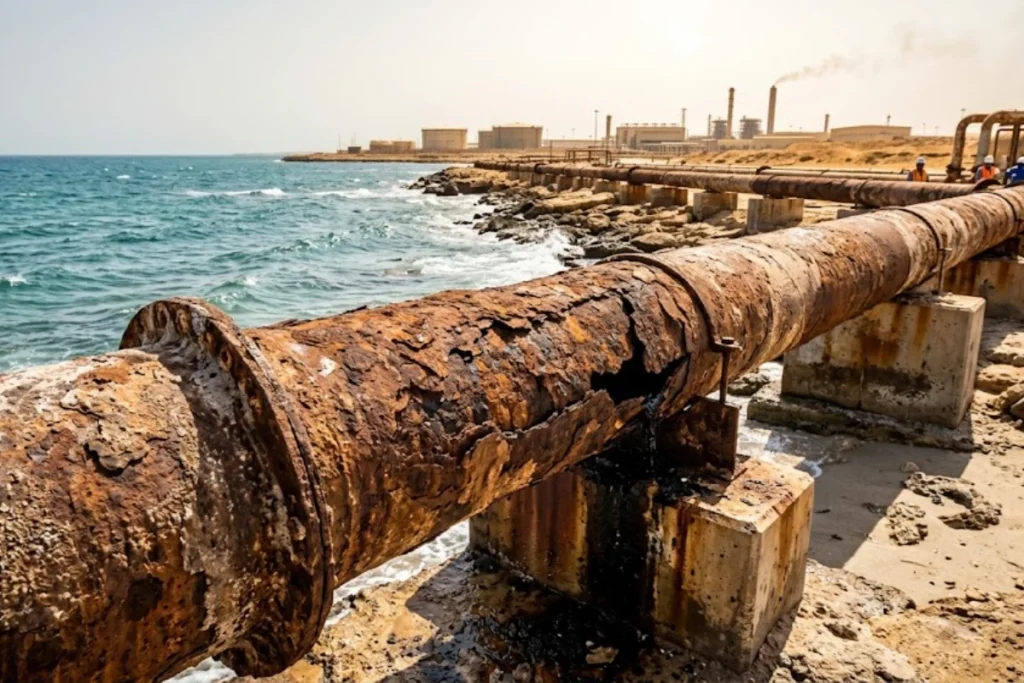
The most evident indication of non-compliance is the lack of protective coating. Exposed steel is subject to moisture and salt; hence, it needs a robust barrier. Miscellaneous steel loses its lustre rapidly in Saudi coastal and industrial areas, with or without a coating. In case the pipes are found to be rusting prematurely, then it is probable that the protective layer is too thin.
The regulating bodies expect that the protective zinc coating will take decades to deteriorate. In case of inadequate micron thickness, zinc is rapidly worn off. This exposes steel to the effects of oxygen and moisture. With the passage of time, there are leaks and structural defects. One notices dull or uneven surfaces easily through visual inspection. These are pointers of poor manufacturing processes.
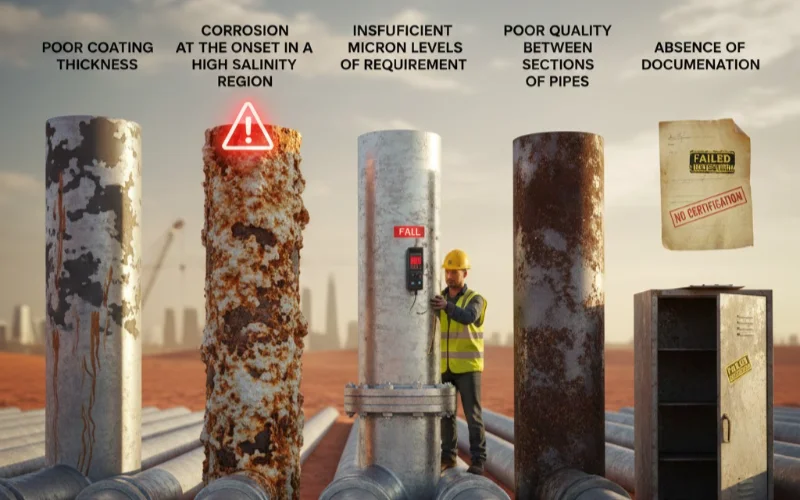
2. Corrosion at the Onset in High Salinity Regions
The coastal regions in Saudi Arabia are very challenging. Salt particles are suspended in the air and deposited on steel. Corrosion reactions are caused by moisture. Pipes that deteriorate within several years are very alarming.
| Indicator | Compliant Standard | Non-Compliant Sign |
| Corrosion Rate | Develops very slowly over decades | Visible rust within the first few years |
| Material Choice | High-grade hot-dipped galvanization | Weak zinc bonding or poor processing |
| Geographic Durability | Resists Red Sea/Arabian Gulf air | Rapid degradation in coastal zones |
Early rust is an indication of a mischoice of materials or bad processing. This has been associated with wrong hot-dipped galvanization processes. With weak zinc bonding, the protective performance reduces. This is particularly susceptible to the pipes around the Red Sea or the Arabian Gulf.
3. Insufficient Micron Levels of Requirement
Zinc layers are used to protect microns. This measure dictates the duration of protection of steel. Minimum requirements are very high in severe Saudi conditions. Fire system and utility pipes should have values that are specified.
In cases where the manufacturers compromise, the micron thickness is much lower than anticipated. These shortcomings are indicated by testing with gauges. Low scores imply less service life. Although pipes may seem acceptable initially, poor quality of micron results in undetected corrosion. Internal corrosion may affect pressure integrity over a period of time. Such a failure is directly against the Saudi Civil Defense Standards.
4. Poor Quality between Sections of Pipes
Uniformity is one of the major indicators of proper manufacturing. The coat and finish on compliant steel pipes are uniform. Diversity implies low quality control. This occurs when some parts are smoother or shinier than others. Such inconsistency tends to indicate uneven deposition of zinc.
In extensive projects, pipes can be based on dissimilar batches. In case standards are not implemented, there will be poor quality. This brings about weak points in the system. Such installations are normally rejected by authorities during inspections. Predictability leads to a consistent performance in times of stress. Lack of uniform protection leads to higher risk in maintenance and low safety margins.
5. Absence of Documentation and Certifications
There is not only physical compliance; it is necessary to have good documentation. Test reports and certificates are provided on pipes that meet the Saudi Civil Defense Standards. These reports affirm the grade and coating performance of materials. Lack of paperwork is a warning.
The absence of certification means that there is no evidence of compliance. Even coated pipes cannot pass inspection without documentation. Traceability is necessary for regulatory bodies. Accountability is achieved through documentation. These details must never be overlooked by contractors before installation. The use of assumptions places projects at risk of being rejected and reworked.
Significance of Appropriate Galvanization in Saudi Conditions
The environment in Saudi Arabia requires strong corrosion protection. Chemical reactions are increased by high temperatures. Moisture on surfaces is maintained by humidity. The combination of these factors increases the degradation of metals. The correct thickness of zinc coating is vital for the duration of service.
Greater protection should be used in extreme exposure areas. To make service life longer, engineers define larger zinc layers. This lowers maintenance expenses and ensures safety in case of a disaster. Reliable pipes are used in fire protection systems; there can be devastating failure in the event of fire if standards are not met.
Compliance Planning and Estimating
Compliance is enabled by accurate planning. Coating requirements influence the cost of materials. Greater protection will imply greater quantities of zinc. These realities must be reflected in the budgeting. Professional estimating prevents unexpected issues.
Arif Al Khayr is a great company that assists contractors in obtaining good construction estimating services. Their knowledge assists in matching budgets with regulations. This is to ensure that no cost pressure compromises quality. Adequate estimates save safety and profit.
Risks of Non-Compliance in the Long Run
| Risk Factor | Impact of Non-Compliance |
| Operational Costs | Expensive repairs to operational facilities |
| Downtime | System shut-downs derail business operations |
| Safety | Increased risk of structural or fire system failure |
| Replacement | Necessity for absolute replacement of round pipes |
| Regulatory | Rejection by authorities and costly rework |
Violation of compliance signals is a costly affair. It is always more cost-effective to meet the Saudi Civil Defense Standards initially. Good materials are the ones that can be sustained. The inspection process is made easier, and asset value is preserved. Investing in reliability is investing in compliance.
Conclusion
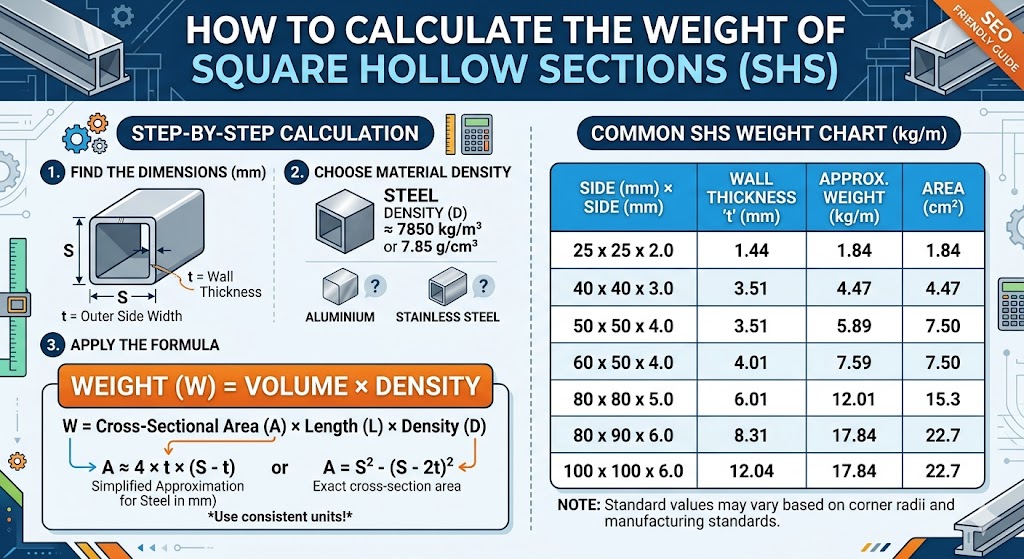
The piping systems in Saudi infrastructure utilize various steel types, including square tubes. Environmental conditions require keen compliance with protective Saudi Civil Defense Standards. The discussed five signs bring to the fore typical compliance failures. Early corrosion, thin surfaces, irregular quality, and lack of documentation are all warning signs. Stakeholders can also look into pipe threading and grooving services Madinah to ensure joint integrity. With these indicators, stakeholders are able to act early. Decent galvanization and verification are the guarantee of decades of system protection. Compliance is not voluntary in high-salinity Saudi settings; it is a must to be safe, stable, and successful in the long term.
Would you like me to generate a detailed checklist for site inspectors to use when verifying these steel pipe standards?