ERW vs. Seamless Pipes: Choosing the Right Manufacturing Technology
The ERW vs. Seamless Pipes case is an issue that decades of the steel industry have been enjoying. Most buyers believe that seamless pipes are always superior. This is a prevalent belief, which is, however, not always true. This is no longer the case with modern manufacturing. Nowadays, ERW technology has high-frequency performance. It provides consistent thickness of walls and consistent strength. In most uses, it is equally effective and cheaper than seamless pipes.
This blog describes these two technologies in layman’s language. It also dispels myths that abound, and it helps you make a wise choice.
Understanding Pipe Making Fundamentals
There are various methods of producing steel pipes. The process influences the power, stability, and cost.
The two most popular ones are:
- Electric Resistance Welding (ERW)
- Seamless pipe production
Each process has strengths. Use, stress, and cost will be the factors of the right decision. Knowing the difference between ERW and Seamless Pipes, one must know the manufacturing process.
What Are ERW Pipes?
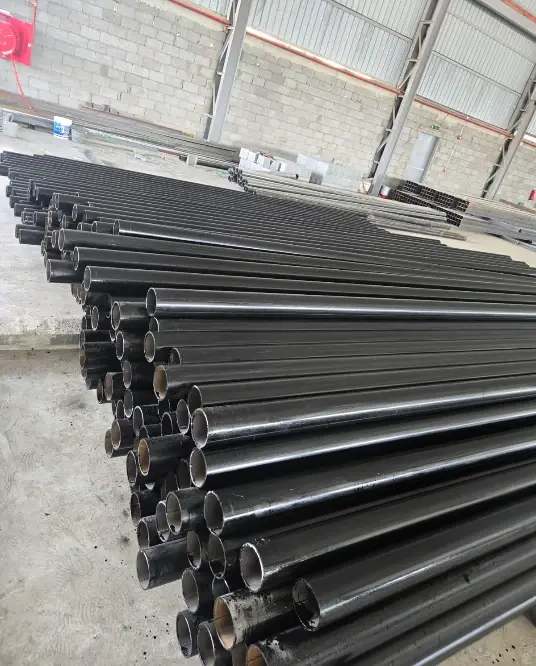
ERW pipes are made out of coils of steel. The steel is rolled to form a round shape. They are then welded using electric resistance to make the edges. High-frequency welding is used in modern ERW. This produces a good and clean weld. The operation is regulated and accurate. The heat treatment is done on the pipe after welding. This eliminates stress and enhances power. There are quality checks that bring out consistency.
What Are Seamless Pipes?
Welding of seamless pipes is not done. A solid billet of steel is heated. After that, it is punctured to create a hollow tube. The pipe is cut and drawn to the required size. This is because there is no weld, and therefore, many think seamless pipes are stronger. This is an ideology that has been there over the years. Nonetheless, recent testing indicates that an ERW weld is no longer a weakness in pipes.
The Myth: Seamless Pipes Are Always Better
Seamless pipes being the greatest is the biggest myth in the industry, where it is believed to be better in every situation. This is not true.
Welding of a seamless pipe was desirable because of constraints. ERW methods that were older made weaker joints. That has changed.
In the ERW vs. Seamless Pipes comparison, the performance gap in modern ERW has been bridged.
Wall Thickness Consistency Explained
Consistency is an important aspect of the performance of pipes. Stress concentration is brought about by uneven walls.
ERW technology with high frequency gives it good thickness uniformity. During forming, the steel strip is strictly regulated.
Thickness may vary in seamless pipes. The walls may be uneven as a result of the process of piercing. This is widespread at higher diameters.
In several projects, uniformity of the thickness is more significant compared to the absence of the weld.
Strength and Performance Comparison
The power relies on material and production management. Welds made by modern ERW are sturdy and sound.
In high-frequency welding, a smooth grain structure is produced at the weld. The heat treatment that comes after welding enhances the mechanical properties.
ERW pipes meet the required standards in pressure and structural uses. This puts traditional beliefs to the test.
The ERW vs. Seamless Pipes comparison should not rely on obsolete beliefs, but rather on the actual performance.
Cost Efficiency and Availability
The cost is a significant factor in the choice of materials. Pipes that are seamless cost more to make.
ERW pipes incorporate the use of steel coils, thereby minimizing wastage. There is more speed and efficiency in production.
This results in lower prices. Also, it is better in terms of availability as it is characterized by shorter lead times.
When dealing with big projects, the savings in costs can be high.
Modern ERW Manufacturing Quality Control
ERW facilities in the modern world employ advanced inspection mechanisms. They use ultrasonic testing and online monitoring.
The defects are examined in every weld. There is close control on dimensional accuracy.
These systems are utilized by manufacturers with high-frequency ERW technology, such as Arif Al Khayer. This guarantees reliability and consistency.
The performance of ERW has been changed with quality control.
Applications Where ERW Pipes Excel
The ERW pipes find extensive application in industries. Their performance is applicable in numerous applications.
Common uses include:
- Structural frameworks
- Water and fluid transport
- Mechanical systems
- General construction
ERW pipes, including round pipes and square tubes, in such areas are efficient and safe to work with.
Applications of Seamless Pipes
Pipes with a seamless design are not useless. They are necessary in extremely high-pressure and temperature conditions.
They are often used in:
- Critical boiler systems
- Specialized oil and gas lines
- Extremely stressful environments
These are restricted and narrow cases.
Standards and Compliance
In the case of both ERW and seamless pipes, they have to meet international standards. These are ASTM and other specifications.
Compliance will not be achieved by the method of manufacture, but by tests. Certified ERW pipes are as satisfactory as seamless pipes.
This renders the choice of ERW vs. Seamless Pipes more of an application than a perception choice.
Installation and Fabrication Considerations
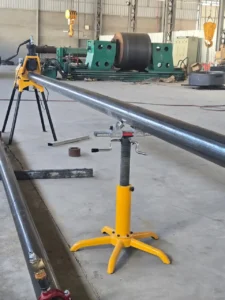
ERW pipes are easier in cutting and welding. They are uniform, which makes them easy to fabricate. Seamless pipes might be more preparation-intensive. Alignment may be impacted by variation in thickness. The ease of fabrication reduces the hours of labor and the delays of projects.
Long-Term Reliability and Maintenance
Dependability is a matter of good choice. ERW pipes take decades to perform when properly used. The durability is enhanced by modern coating and treatment, such as hot-dip galvanizing services. Both types have similar corrosion resistance. The importance of the manufacturing technique is not as high as the correct selection of the pipe that should be used in the environment.
Environmental and Production Efficiency
ERW is more efficient in energy consumption. It has fewer wastes and uses fewer raw materials.
This helps to promote sustainability. Seamless production uses more power in heating and piercing.
Environmental consideration is also becoming a significant criterion in decision-making.
Making the Right Choice
The right pipe relies upon actual requirements. The level of pressure, the temperature, and the budget are all important.
Do not rely on myths. Analyze the performance statistics and norms.
The concept of ERW vs. Seamless Pipes assists the engineers and purchasers in making more intelligent choices.
Conclusion
The perception that seamless pipes are necessarily better is already old-fashioned. High-frequency ERW technology nowadays provides good wall thickness and strength. It does so at a lower cost. The comparison between ERW and Seamless Pipes is not on which one is the best in general. It is concerning what is correct to be applied. ERW pipes would be an effective, low-cost, and reliable solution to the current projects when used in the right way.