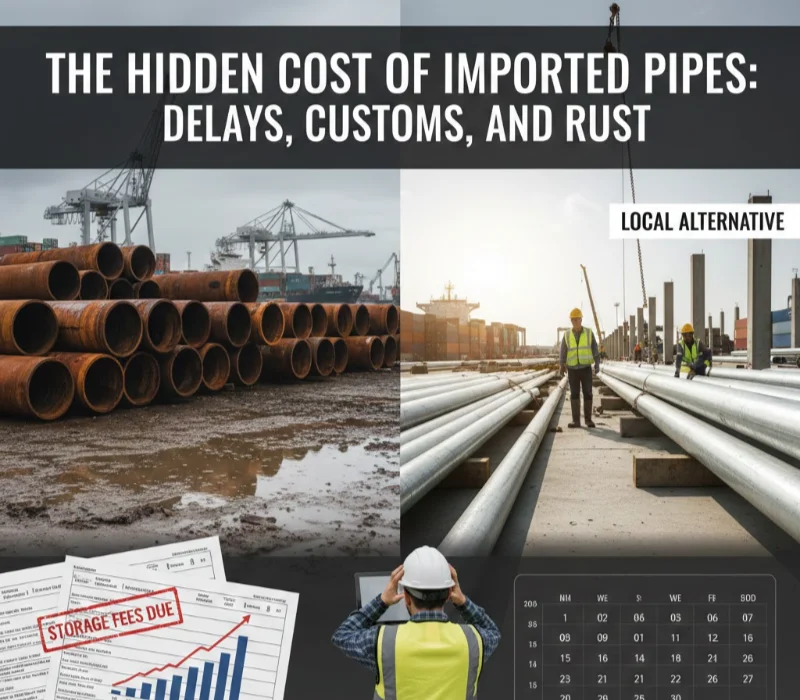
The hidden cost of imported pipes usually catches the contractors unawares, even after a purchase decision is made. On paper, imported piping might seem cheap. Unit prices may appear desirable. Nevertheless, actual expenses become apparent in the future. All these expenses are present when shipping, clearing, storing, and installing. The result of this oversight is that many projects have been delayed and are of poor quality. Knowing such factors behind the scenes will prevent overspending on the budget and operational hazards.
Speed and reliability are important in the current construction industry. Projects are carried out on a tight schedule. Any latitude influences the workforce, machinery, and image. Outsourced materials bring on board factors that cannot be easily monitored. The given blog describes the entire procedure and the place where the hidden costs start to emerge.
Initial Procurement and Overseas Lead Times
This begins with overseas procurement. Orders of pipes are made many months before. The production timetables rely on the overseas vendors. Any interruption has impacts on delivery dates. Production can be halted by political problems, port congestions, or factory closures.
Flexibility is lowered by long lead times. Modifications in designs are expensive. Most of the time, contractors take weeks before they get updates. The silent cost addition is this waiting period. Unoccupied teams and sluggish follow-up work raise overheads without any accounting records.
Shipping and Transit Problems
After being produced, pipes have to cover a long distance. Sea freight is commonly used. Vessels may be slowed by weather conditions. The congestion at ports leads to additional waiting. The project risk is increased by every delay.
| Shipping Risk Factor | Impact on Project |
| Port Congestion | Increased waiting times and schedule slippage |
| Freight Instability | Unpredictable surcharges in fuel and container costs |
| Transit Damage | Minor dents affecting structural integrity |
| Replacement Logistics | Significant time and money waste for new orders |
Shipment prices are always unstable. Surcharges in fuel and the inability to get containers increase costs in an unpredictable way. The other issue is damage during shipping. Minor dents have an impact on the integrity of pipes. Replacement is a time and money waster. These are some of the reasons that make the hidden cost of imported pipes high.
Procedures and Documentation Problems
Materials are subject to examination on arrival. Paperwork should be flawless. Any mismatch leads to holds. Complex shipments are usually associated with customs clearance delays. The pipes usually need technical permits and compliance certificates.
The cargo will be accumulating demurrage fees every day whilst waiting in ports. Storage costs are rising at an alarming rate. Contractors can be fined without improvements at the site. These delays cause schedule and cash strain. Most projects undervalue this stage.
Storage and Handling After Receiving
Materials that have been cleared do not often go to the site. Putting storage is a requirement that is temporary. Warehousing costs add up. Unsuitable storage causes emerging threats. Pipes that are kept outside are subjected to humidity and dust. Coatings of protection are degradable. It is also common to have to deal with damage during unloading. Such problems augment the cost of preparation in the future. Regional substitutes tend to eliminate these risks.
Checking and Verification of Compliance
The imported pipes should be of local standards. Verification takes time. Occasionally, third-party inspections are necessary. Rejection or rework occurs when there is any failure. Initial estimates do not normally include testing costs. Installation is delayed due to inspection. Crews wait idle. Rentals of equipment go beyond expectations. One day puts a strain on finances. This step also exposes the hidden cost of imported pipes.
Risks of Corrosion in Transit and Storage
Prolonged travels expose the steel to moisture. Deterioration is hastened by salt air during sea transportation. Pipes, even with good coating, can get damaged at the surface. Corrosion damage may begin before installation. As soon as it becomes corroded, performance decreases. The additional cleaning or recoating is required. Pipes, in the worst cases, are to be replaced. These problems are hardly asserted as a warranty. The buyer absorbs the loss.
On-site Installation Problems
Delayed materials interfere with sequencing. Other trades are affected. Shortened time schedules are a source of high labor expenses. Overtime is required to replace the time taken. The imported pipes can also be slightly different in comparison with the local specifications. The compatibility of threads and the standards of fitting may vary. Modifications reduce the speed of installations. These minor problems increase when dealing with big projects. Expenses are increasing unobtrusively, yet continuously.
Delays in the Project and Contractual Penalties
Penalties are instigated by time overruns. Clients are demanding prompt delivery. Contractors are rarely excused because of delays that are brought about by imported materials. The liquidated damages may be in place. Another cost is reputation damage. Late deliveries on deadlines influence subsequent bids. Unreliable supply chains are not forgotten by the clients. These are long-term outcomes that are hardly quantifiable but have an immense influence.
Role of Accurate Cost Planning
Surprises are minimized with proper planning. Direct costs have to be estimated indirectly. The risks of freight, storage, inspection, and delay are to be taken into consideration. Arif Al Khayr is a great company, and it sponsors the projects with good service solutions. The experience assists their clients in evading supply chain traps. Local skills help to minimize reliance on unpredictable imports. Good planning safeguards budgets, as well as timeframes.
Comparison of Imported and Local Alternatives
| Feature | Imported Pipes | Local Alternatives |
| Delivery Time | Long lead times (months) | Shorter, predictable delivery |
| Regulation | Possible standard mismatch | Agreement with local regulations |
| Risk Management | High shipping/damage risk | Minimized handling loss |
| Overall Cost | High indirect expenses | Lower total lifecycle cost |
The local sourcing is predictable. Delivery times are shorter. Standards are in agreement with regulations. Communication is easier. Issues are resolved faster. Unit costs also seem high, but the overall costs are usually lower. Decreased delays mean a smooth execution. Less handling minimizes loss or damage. These benefits eventually overcome short-term savings in imports. Using high-quality round pipes or square tubes from a local provider ensures reliability.
Long-Term Maintenance and Lifecycle Costs
There are problems that continue even after being installed. Pipes that are compromised during transportation can break earlier. Maintenance costs increase. The downtime of the system increases. The replacement of failed parts messes up operations. This risk is not acceptable in a critical system. Purchases should not be determined by purchase price, but by lifecycle costs. Imported materials do not perform well in harsh environments. Professional pipe threading and grooving services Madinah can ensure that even locally sourced materials meet the exact technical needs of your project.
Conclusion
The hidden cost of imported pipes goes much further than the invoice price. Losses, clearance, and corrosion present a strain on finances. These expenses are indirect, but they have far-reaching effects on projects. Imported materials bring in uncertainty, especially in procurement and maintenance. Knowledge of the entire process assists the decision-makers in making wise choices. Trustworthy sourcing as well as reasonable planning safeguard timeframes and budgets. Predictability is invaluable in the construction industry. Selecting the appropriate supply strategy is the key to the success of the projects in the long term.